Limitations of Copper Wire Communication Cables
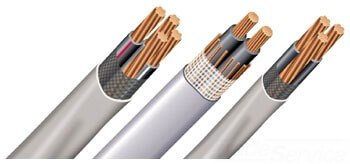
Copper cables have been widely used for data communication because copper is an excellent metal conductor.
Copper cables are commonly used today, but they are being replaced by fiber optic cables due to the limitations of copper wire: attenuation, signal distortion due to
interference or deterioration of the copper, distance and frequency limits, the weight of copper cable, and security issues.
Attenuation or Insertion Loss
As a communication signal passes through a copper wire, the communication signal loses strength due to the resistance of the copper wire. A signal that starts out
with a certain input voltage, will arrive at the load at the other end of the cable with a reduced voltage level. The resistance of the copper wire causes some of the energy in the
original signal to be dissipated as heat in the electric wire. Attenuation is a measurement of the signal strength loss in networking cables measured in decibels or dB. Longer
cables have more resistance and
thus cause more signal attenuation. Attenuation loss is also greater when transmitting communication data at higher frequencies. If the voltage drops too much
over the length of the cable, the signal may no longer be useful.
Attenuation can be calculated using a signal's input voltage (Vin) and output voltage (Vout).
Attenuation(dB) = 20log10 x (Vout / Vin)
Electromagnetic Signal Interference or Crosstalk
Because copper metal is such a good electrical conductor, it can pick up noise from nearby
electric devices through electromagnetic radiation or crosstalk. Longer cables have a greater risk of signal interference. Interference from outside sources can be
reduced by using a copper wire with better insulation or shielding, by shortening the length of the copper cable, or by switching to other cables like fiber optic cables. Fiber Optic cables
are not subject to the same electromagnetic interference because the signal is transmitted by pulses of light in a glass thread, instead of electric current in copper.
Signal Distortion
As a signal travels through a copper wire, the signal may also distort or change shape. Copper wire will corrode over time, which can distort the signal. Old copper wires must be replaced
to eliminate signal distortion due to copper corrosion.
Distance and Frequency Limits of Copper Cables
Because attenuation, signal interference, and signal distortion issues increase with longer copper cable lengths, copper cable networks are not typically used across wide ranges, such as
multiple floors of an office building. Cat 5e or Cat 6 cable can extend up to 328 feet (100 meters) at a speed of 1Gb. More advanced category cables can extend the same distance even using
higher frequency signals. A 328 foot (100 meter) Cat 6 or Cat 7 cable can run frequencies up to 10Gb. A network extender or ethernet repeater must be used to extend a copper network beyond 100m.
Weight of Copper Cabling
Copper cables are bulkier and heavier compared to fiber optic cables, which makes restructuring
cable routes more difficult, and shipping more expensive.
Security Risks of Copper Cable
Copper cables leak electromagnetic radiation which can be decoded outside the network. This could present a security risk.
How to Reduce Attenuation Loss, Noise and Distortion
- Use a thicker gauge of copper wire.
- Use shorter copper cables.
- Use cables with greater insulation or better shielding.
- Reduce the transmission frequency.
- Because copper corrodes over time, replace old copper wiring with new wiring.
- Switch from copper cables to fiber optic cables.
Available Copper Cable Products
See Our Other Helpful Cable and Conduit Guides:
Warning: When using this information to perform electrical work, call a licensed electrician and consult the NEC® for safety.
All licensed electricians have passed examinations covering the National Electric Code®, know state and
local building codes, and may carry insurance to cover damages.